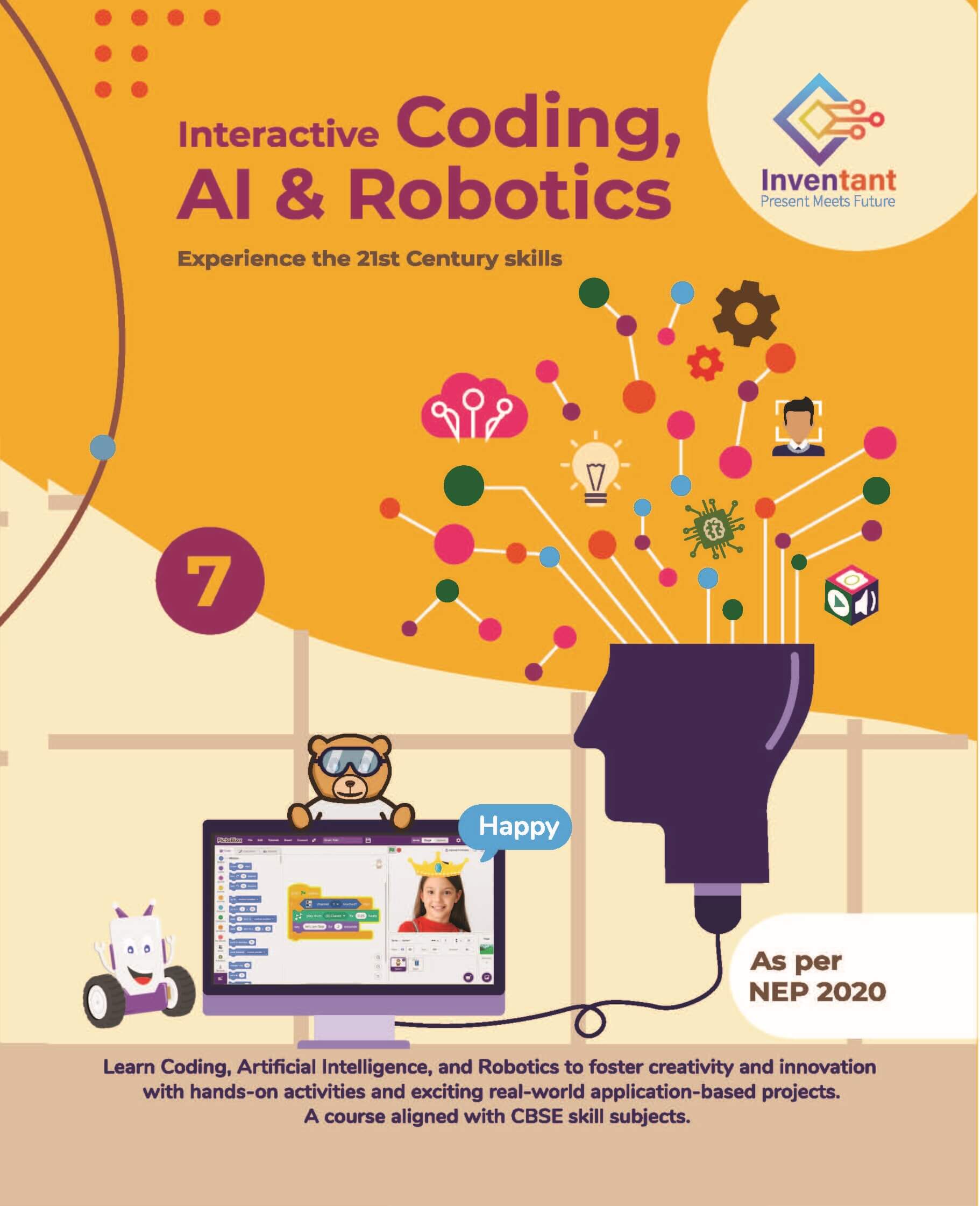
CBSE BOARD
|
CLASS 8
|
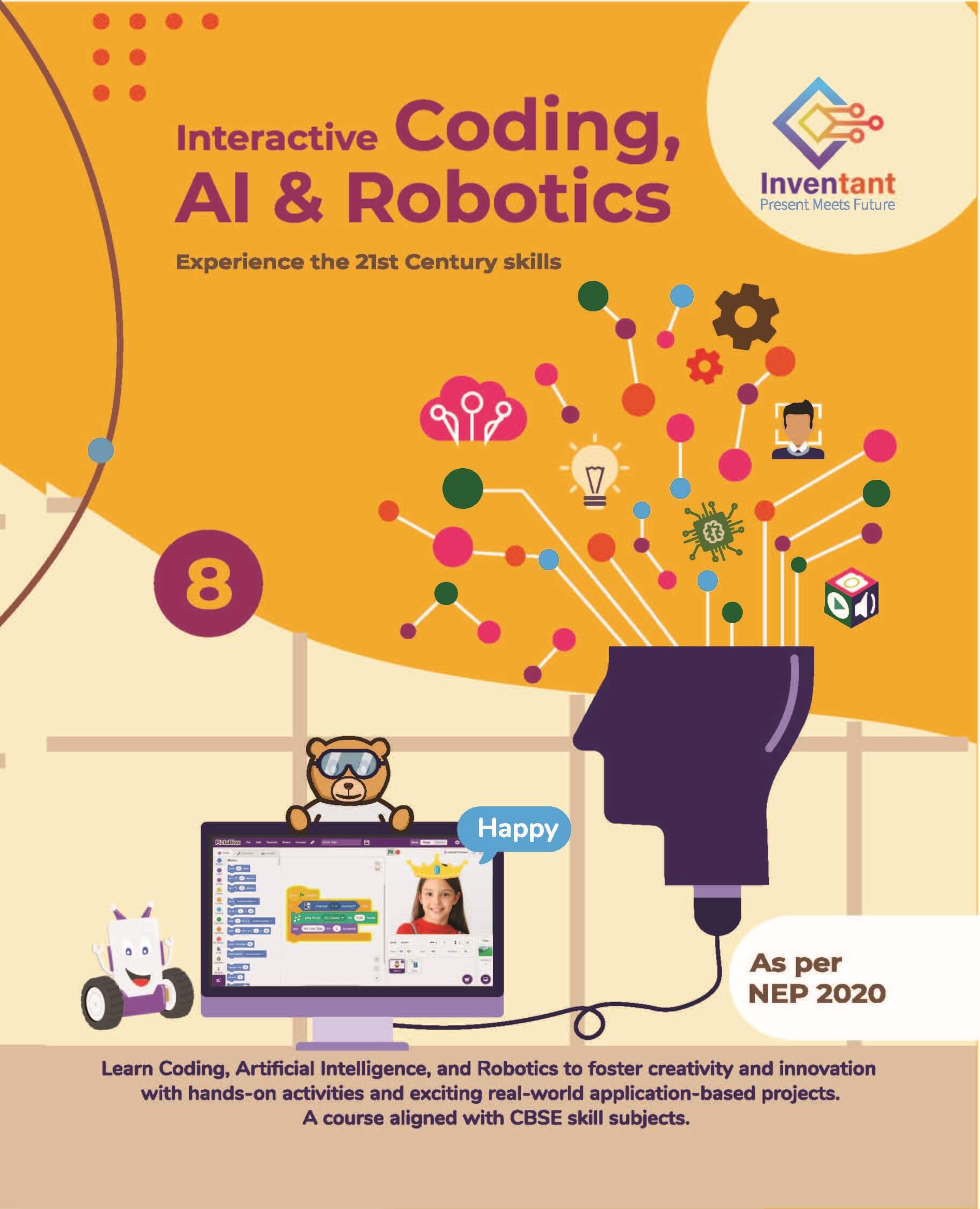
Coding, AI & Robotics
|
By - Pankaj Kumar Verma, Ravinder Singh Bidhan, Vivek Verma and R. SridharaniInteractive Coding, AI and Robotics for Class 8
ISBN/SKU: 9789363527126
Key Highlights
- Designed for Class 3 students
- NEP 2020 aligned curriculum
- 30 Activity-Based Lessons
- Learn Coding, AI & Robotics
- Hands-on projects with PictoBlox & Quarky
- Step-by-step learning approach
- Includes Worksheets & Activities
- Develops Problem-Solving & Computational Thinking
- Enhances Creativity & Critical Thinking
- Ideal for STEM Education & School Learning
About the Book
Coding, Artificial Intelligence, and Robotics have become important for students to learn because they are essential skills in the 21st century. Coding helps students to become better problem-solvers, while AI and Robotics help them to understand and interact with technology.
This book contains 30 lessons on Coding, AI and Robotics with fun-filled hands-on activities for students of Class 8. Leaming these skills at a young age will give them a major advantage in their future careers. They will be able to think critically, design new technology, and create innovative solutions to difficult problems. Moreover, it comprises the recommendations of the National Education Policy 2020 and helps students to become more creative and to develop their own ideas.
Salient Features of the Book
This book covers 30 engaging lessons that incorporate practical activities using PictoBlox and Quarky to help you learn the basics of coding, AI, and robotics.
The following concepts are covered in this book:
Coding Concepts: Learning the basics of programming, creating animations, playing with sounds, making stories and games. Students will learn to use the PictoBlox software and its interface.
Physical Computing: Learning the basics of hardware programming with Quarky. Students are able to create dynamic emotions and heart beat patterns, name badges, play music with sensors, create a fruit-catching game and weather monitoring system.
Artificial Intelligence: Learning about AI and Face Detection, recognizing facial expressions, Quarky face mimicking, creating face filters, and programming scripts to detect and report facial expressions.
Robotics: Learning about robotics writing scripts to control robot movements, understanding the uses of robots, making a square with robot, making soccer playing robo and gripper robot.
Chapter Specific Features
• Chapter content meets the requirements of tech-savvy students.
• Activity-based learning approach to learn the concepts.
• Knowledge Box summarizes the concepts covered in the activities.
• Step by Step Procedure provides the instructions for the activities performed in the lesson.
• Worksheet test the knowledge gathered during the lesson with questions.
Teacher's Resources
• Lecture Slides
• Lesson Plans
• Activity Sheets and Worksheets
We hope that this book will meet the needs and requirements of the students by making them the creator of the technology. Any suggestions for further improvements to the books will be welcomed.
| Category | Course Book |
| Format | Digital Book |
| Type | Course Book |
| No. of pages | 160 |